
Changing Your Mind
No one is always right, but how you handle being wrong matters.

If you liked reading this, please click the ❤️ button on this post so more people can discover it on Substack. Thanks!
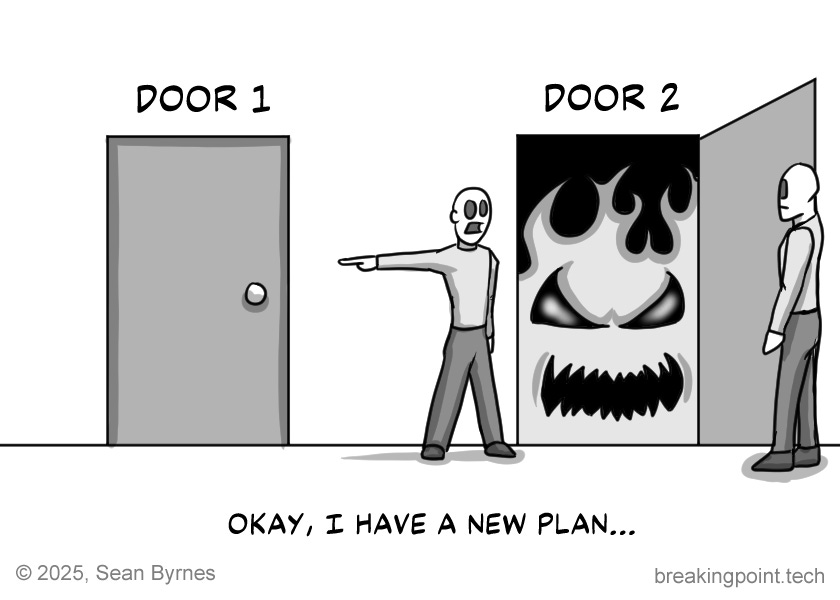
Business is not an exact science. No one is correct all the time, so we all make a lot of mistakes! Hopefully, we catch our mistakes before they do too much damage and correct our course.
Changing your mind means admitting you were wrong, which is hard for all of us. No one’s ego is so secure that it doesn’t sting a little. But, it’s better to admit we were wrong and change our minds than suffer through a mistake for some misplaced pride. Business performance depends on us putting our decisions above our pride.
However, many leaders don’t do that. In fact, they go to such great lengths to avoid admitting they were wrong that they damage their teams. Here are some examples of how a leader can damage their team while changing their mind:
You claim that you never changed your mind, even though it’s obvious you are, and that you were always planning to do it a different way. Any suggestion to the contrary is met with derision.
You change your mind to someone else’s idea and claim that you came up with it all on your own. You criticize them for trying to claim your idea.
Stay committed to your original idea in front of your team while behind the scenes doing something entirely different.
We’ve all worked for people who use at least one of those techniques. If you work for someone who uses more than one, it is probably a good idea to look for a new job. All of them erode trust, degrade teamwork and make it harder for anyone to believe in any future decisions.
These are extreme examples, but there are much tamer versions that also do damage. The most common is to change your mind but never tell anyone, so your team is left guessing as to what happened.
Ideally, when we change our mind we want to make the team stronger, not weaker, and build trust. Here’s an approach to do just that:
Admit that you were wrong. Acknowledging you made a mistake is hard, doing it in front of your team is harder. However, it’s important that this is where you start! Describe why you were wrong and why a new decision is necessary as that will build trust in future decisions.
Make the new decision clear. It’s important everyone understands the new decision so there is no confusion between the old and new. Make sure there is a clean break.
Acknowledge the team. If the change is due to new ideas from the team, thank them! Praise them for helping avoid a mistake, or at least correct one. This will encourage others to speak up in the future.
Highlight what everyone can learn from the process. This decision might be over, but there will be more. Learning from experience is important for everyone so being explicit about the lesson will make sure it lands.
Leading by example is important, as you want your team to know it’s okay to change their minds as well. If you do it well, your team becomes more adaptive and flexible while being open to new ideas. That’s exactly what you want.
What matters in business is being right more than you’re wrong, and changing direction when necessary. If you get good at changing your mind, and communicating it to your team, then you can change direction more easily and turn some of those wrongs into rights.
Like anything, the more you admit you were wrong the easier it gets. You shouldn’t change your mind all the time, but you need to be ready to do so when the time comes. Do it quickly, don’t hesitate, and you’ll already be ahead of most of your peers.
For more on Making Decisions, see:
Nice!
One of my favorite mantras over the years has been: "strong opinions, loosely held". I keep a log file of personal mistakes. It's long.
Love this one - I used to be very stubborn early in my career and think I was right - but realized hey being wrong is how you learn, and no one bats 1,000. I've become far more humble and feel good about failing fast, taking the lesson and moving on (vs holding onto something bc of ego).