
High Trust Teams Move Faster
Politics and conflict slow you down.

If you liked reading this, please click the ❤️ button on this post so more people can discover it on Substack. Thanks!
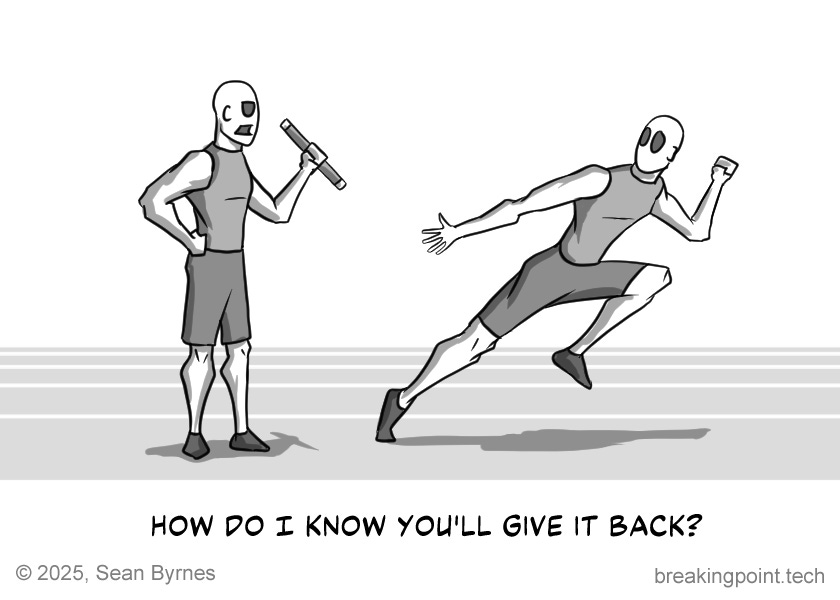
Corporate politics are so common that it’s rare to find a company without them. Controlling the flow of information, jockeying for position and even undermining other people to get ahead are all parts of the same political game. Corporate politics make any job a zero-sum game because someone has to lose for someone else to win.
All of that politicking wastes an enormous amount of energy. Any time someone is thinking about politics is time not being spent on moving the business forward. Any energy spent planning and executing political moves is energy wasted. Politics is the organization struggling against itself, not working together.
So, if politics are such a waste of time why do so many companies have them?
It’s all about trust. In a low-trust organization, you cannot be sure if everyone else is playing politics so you have to assume they are. Soon, that gives way to actual politics that eventually become part of the culture.
Most organizations are low-trust as it’s the default for any organization. Why would the employees trust what management says? Or what everyone else says? If they have worked at other companies with low-trust and high politics, they learned not to trust.
If you want to avoid or eliminate politics you need to focus on building a high-trust team. With high-trust, no one is worrying about someone else’s intention or whether they will get stabbed in the back. A high trust team means everyone knows they can trust everyone else.
High trust teams are hard to build! To do so you need to de-program years of political training from other companies where your employees have worked. You also need to work harder as a leader to build and earn trust, and be sure to never lose it.
It can seem like an impossible task, but there are things you can do immediately that will get you on that path:
Make publishing the default. Publish goals, schedules, metrics and responsibilities so that everyone can see them without needing to ask permission. Use a shared document, internal website or your tool of choice - the platform doesn’t matter! Politics thrive when information is scarce, and opening up information to everyone naturally builds trust. Just make sure it’s always updated.
Clarify responsibilities. If there is confusion about who is responsible for something, it’s fuel for politics. Either someone will look to do more to expand their influence, or blame someone else if it fails, or both! Make everyone’s responsibilities clear and public so there is no room for confusion.
Hold skip-levels. Meeting with the people who work for the managers on your team opens up lines of communication and makes it hard for anyone to control the flow of information. It’s hard to play politics when they know anyone can talk to you directly and tell you the truth.
Reward execution over politics. As a leader, whatever you reward is what everyone will want to do. If you reward the people who play politics, everyone will play politics. Reward the people who execute and move fast, so that everyone will follow that example.
These are just the first steps, building trust takes time and commitment. If you start on the path you need to see it all the way through, or else it will be worse than having done nothing at all.
If you don’t have any politics at your company, congratulations! You’re doing a great job. However, you might want to make sure that your team isn’t just hiding the politics from you. There are many leaders who think their teams are politics-free because their team does it in the shadows.
You’ll know you have a high-trust, low-politics team when your execution velocity continues to accelerate. You’ll start to move so fast that it will seem like your competition is moving in slow motion.
And they probably are, thanks to their internal politics.
For more on Productivity, see: