
The Two Voices of Leadership
You have two voices as a leader, don’t confuse them.

If you liked reading this, please click the ❤️ button on this post so more people can discover it on Substack. Thanks!
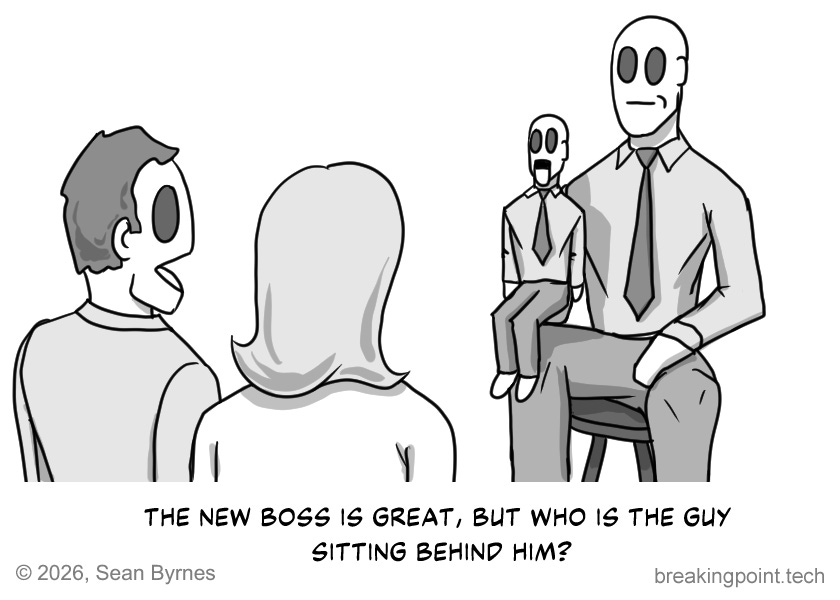
Every leader has two voices.
There is your voice as an individual, where you express your personal opinions, perspectives and decisions. When you use that voice your team sees you as a peer, and they are open to disagree and debate. If you have a good team they will! Disagreement and debate leads to better outcomes when you’re in the realm of opinions.
But, companies are not democracies and not everything can be debated. There are many goals and decisions that it’s a waste of time to debate. Sometimes the business demands things itself, such as aggressive goals, cost cutting or strategic pivots. When that happens the team needs to fall in line, not fight about it. These are not opinions.
As a leader you have a second voice, the voice of the company. That’s the voice you use in these moments where debate is not welcome, where the decision or direction is set and everyone’s job is to follow it. When you use that voice, there should be no debate - just action.
Unfortunately, many leaders confuse the two voices. They use the voice of the company for their own opinions, to stifle debate. Or they use their individual voice to deliver company goals, which leads to unnecessary distraction. Or, worse, they use only one of the voices all the time, for everything.
A great leader balances the two voices, using the right voice in the right situation. But how does your team know which voice you are using? (You’re not changing your literal voice, afterall.)
You need to tell them.
If you’re using your individual voice to share opinions, tell your team. Start the meeting by making it clear that debate is welcome and other points of view are encouraged. Qualify it by sharing that these are only your opinions. Be explicit, don’t assume they know.
If you’re using the voice of the company, tell your team. Make it clear these are non-negotiable decisions or goals, and that the company needs them to be achieved. Ask them to disagree and commit, because everyone needs to be pushing in the same direction. Give the reasons why this is an imperative and why this is not a matter of opinions. Leave no room for confusion.
The most common mistake is not being clear which voice you are using with your team. If they need to guess, you have already failed them. You know which voice you are using, obviously, but you cannot assume they know as well.
This is a learned skill, and all leaders make mistakes using the two voices at some point. Especially when you’re angry, it’s tempting to pull rank and use the voice of the company to win the argument. But, as you get better, you realize that the two voices are one of your most powerful tools to both lead your team and keep them focused.
So speak with two voices. Just be clear when you do.
For more on Leadership, see:
The confusion between these two voices is one of the most common things I see working with senior leaders. In my own experience, I leaned on the personal voice as much as possible — it felt more authentic. But the most damaging pattern is using the company voice while pretending it's personal. People sense it immediately, and trust erodes fast.
I sometimes state when I speak with my personal voice. People assume that I usually speak with my company voice, so I mention when an opinion is my own.