
Customers are People Too
They have a lot more dimensions than just buying your product.

If you liked reading this, please share it with someone else. The larger our community, the more time I can spend on these posts. Thanks!
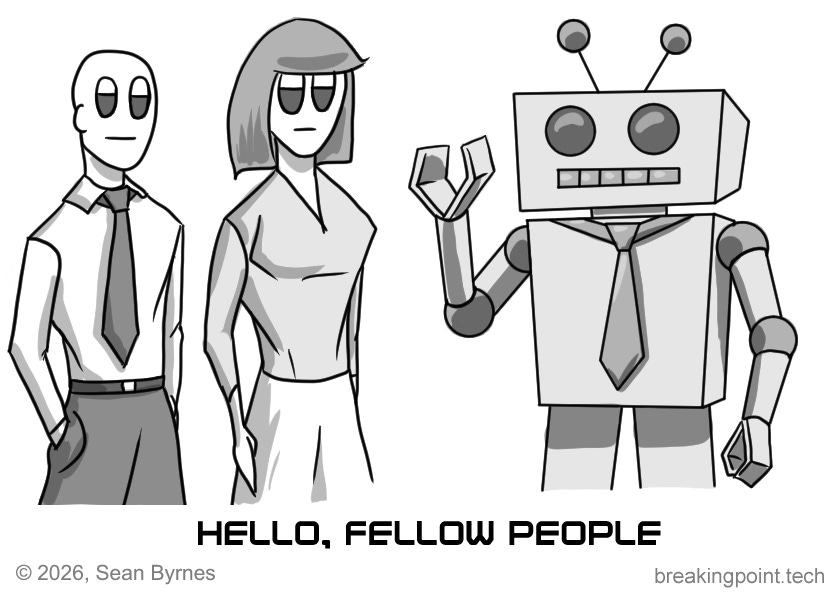
Customer research has become almost a science, with countless articles and frameworks for measuring, understanding and predicting customer behavior. The tools available to monitor and watch customers have never been better, and most companies have realized that customer-centric thinking is the key to success.
An interesting side effect of this is that more teams are not really seeing their customers as people anymore. They see them as characteristics, as statistics and as transactions. The customer becomes an entity whose sole purpose is to purchase and use the product, and optimizing for that becomes the priority.
Customers, of course, are not that simple. Customers are people!
Customers have many competing priorities, many interests and needs. Those extend well outside of their job and company, including their career goals and personal lives. All of those dimensions shape customer behavior, even if you never see them.
Customer refuses to meet with your customer success team? Maybe they don’t like your product. Or they might just be really busy. Or maybe they are looking for a new job!
Customers are not your friends, and as a result they are unlikely to share most of their lives with you. They aren’t going to share their hopes and their fears, and even their internal priorities. Just like you won’t share yours with them!
Still, when you start thinking about your customers as people you realize there are many ways that can work in your favor:
New channels to reach them. It might be hard to reach your customers based on their job, as those channels are likely saturated with other companies doing the same. But, if they have interests other than their job you can reach them there! For example, finance people often enjoy puzzle games, so you might be able to promote a product to them through the games they play.
Better conversions. As I’ve said before, most business products are bought to get someone promoted. If you see the purchase process through that lens, you can improve your conversions by identifying who wants to get promoted and giving them the tools to show your product will get them there. A simple example are case studies that involve someone who did get promoted after buying your product!
Better retention. Until the AI agents take over, sales are still about the people involved. A buyer is less likely to take a meeting with your competitor if they like working with you, and a big part of that is building a relationship outside of just your product. Are there ways you can help them that aren’t related to your business? If so, you have a great way to deepen that relationship.
In today’s world of AI tools, some of this has become saturated as well. AI tools scrape social media to identify your interests, like professional sports teams you follow, and generate outreach that makes it seem like the company sees you as a person. As a result, it doesn’t really work anymore.
Still, customers people are just like the rest of us. They respond to the same things, and have the same mix of positives and negatives in their lives. If you think about them that way, you can get past all of the noise and connect.
All of us want to feel like more than just a purchasing robot. Treat your customers that way and you’ll be ahead of the competition, just by treating them like people.
For more on Customers, see: